From May 12th to 14th, 2026, Mr. Dinh Xuan Lap - Vietnam Fisheries Society (VINAFIS) and Mr. Pham Quoc Huy - Vietnam Academy of Fishery Sciences (VAFIS) attended the International Workshop on Octopus Fishery Management at the Malaga Oceanographic Centre, Spain. The workshop was jointly organized by the Marine Management Council; the Ocean Management Fund and the Malaga Oceanographic Centre.
The workshop was attended by representatives from the octopus fishing industry, government experts from various countries, research organizations, non-governmental organizations, and commercial enterprises.
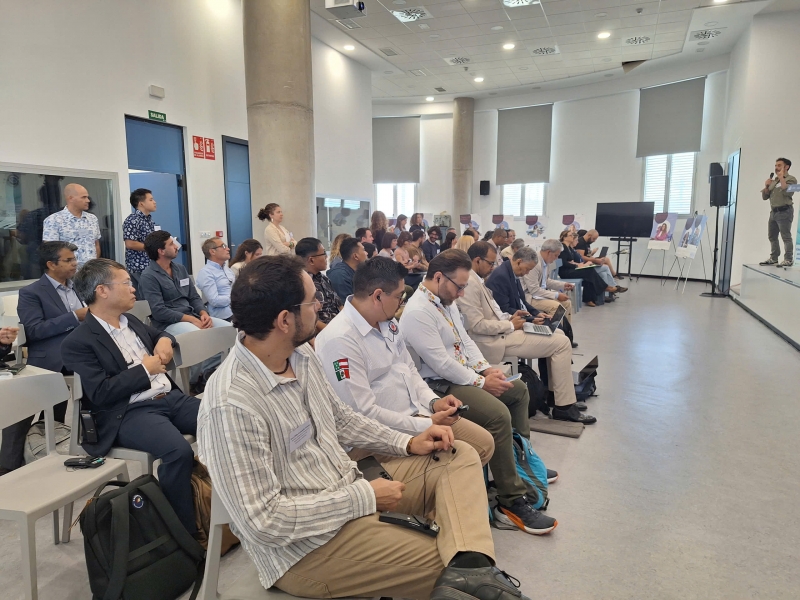
The workshop focused on sharing and discussing key issues, including:
+ An overview of global best practices in octopus fisheries management
+ Insights from regional and international management research and initiatives
+ Case studies from octopus fisheries worldwide
+ Interactive panel discussions on practical challenges and solutions
+ Developing a comprehensive guide to support better decision-making in octopus fisheries management.
Within the framework of the workshop, delegates visited the Motril octopus fisheries management practice site. During this field trip, delegates learned about the current state of octopus fishing and management in the Mediterranean, operational and control methods, and on-site data verification such as public auctions at ports. They also learned about the application of intelligent software in fisheries management at ports.
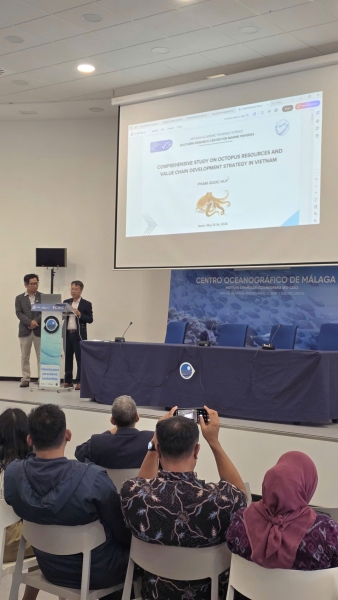
At the workshop, Mr. Pham Quoc Huy and Mr. Dinh Xuan Lap also presented and shared their findings on "research on octopus resources and value chain development strategies in Vietnam." Octopus is one of Vietnam's main exploited products, currently exported to Japan, South Korea, Europe, etc. According to research results, Vietnam currently exploits about 12 species of octopus, mainly concentrated in the fishing grounds of the Northern and Southeastern regions, using two main types of fishing gear: traps and trawls. Due to small-scale fishing, outdated equipment, and weak value chain linkages, the quality of post-harvest products in Vietnam is still not good, with post-harvest losses currently accounting for 20-25%. Therefore, future strategies will include: i) strengthening value chain linkages; ii) applying new technologies to reduce post-harvest losses; iii) closely monitoring IUU (Illegal, Unreported, and Unregulated) fishing; and iv) ensuring transparent product traceability.
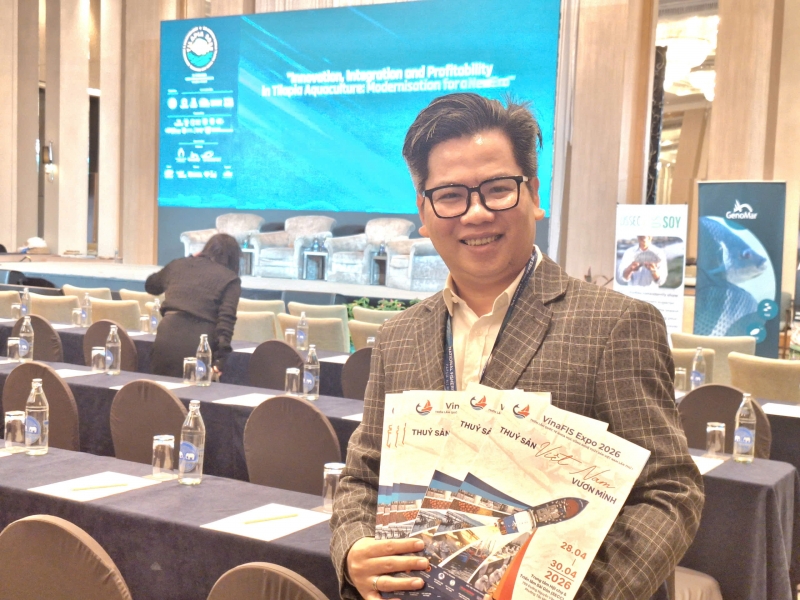
Mr. Dinh Xuan Lap, Deputy Director of ICAFIS, Vietnam Fisheries Society, and MSC certification expert, shared: “Through the two-day workshop, I learned many valuable experiences from other countries in sustainable octopus fisheries management and the application of co-management in fisheries resource management, as well as the application of FIP/MSC. Of the two octopus fishing methods in Vietnam, I see that trapping has high potential for applying the FIP/MSC program because it is highly selective, has a tightly organized production system, and has fixed fishing grounds. Hopefully, in the future, we can encourage the fishing community and businesses in the octopus industry to participate and establish an octopus FIP/MSC program for Vietnam.”
Dinh Xuan Lap